
Dimensional Letters
Nothing makes a sign stand out like adding the third dimension. 3D or dimensional letters come in steel, aluminum, or acrylic, and all colors and finishes.

Styles

Fabricated Metal
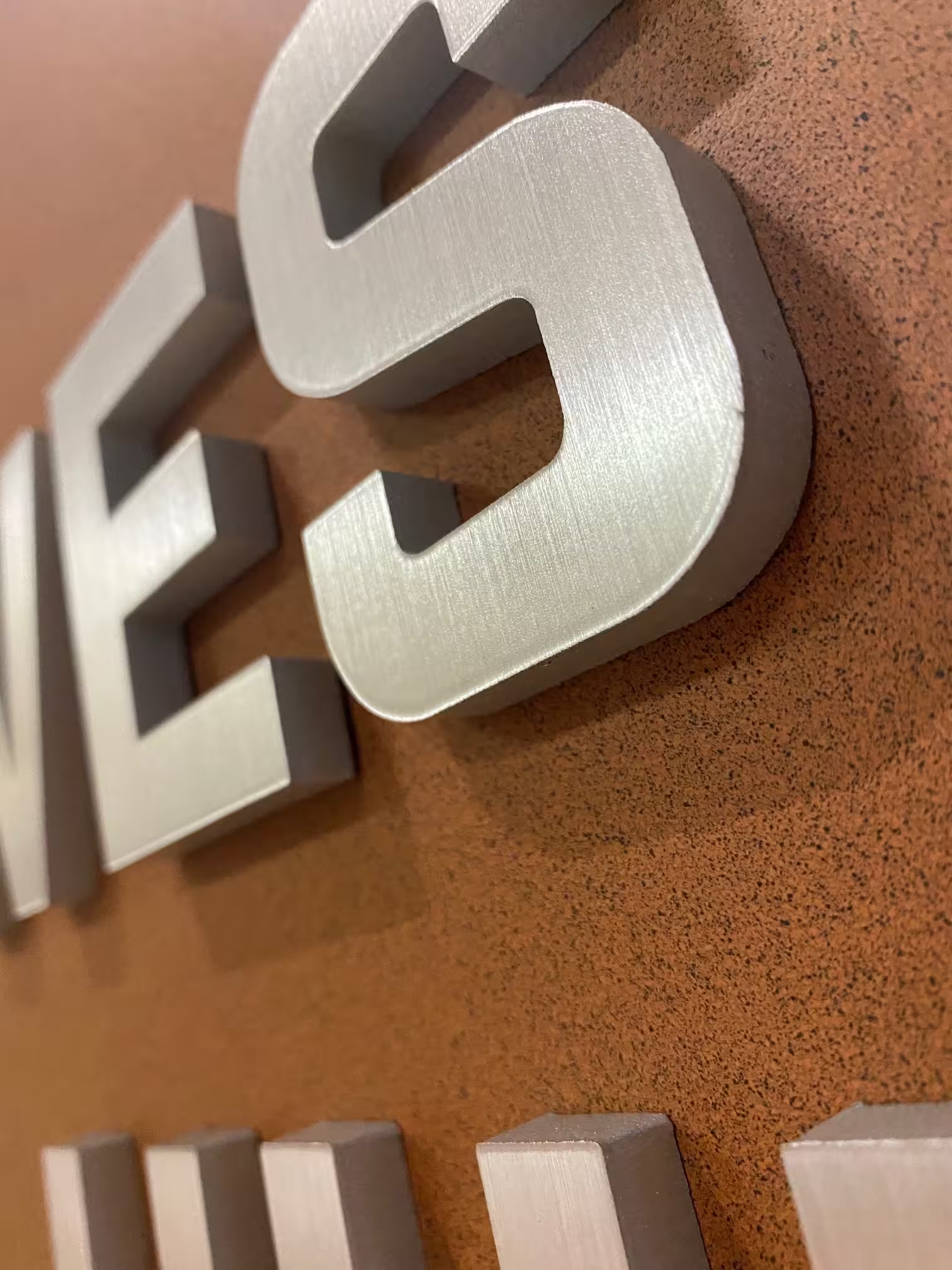
Flat Cut Metal
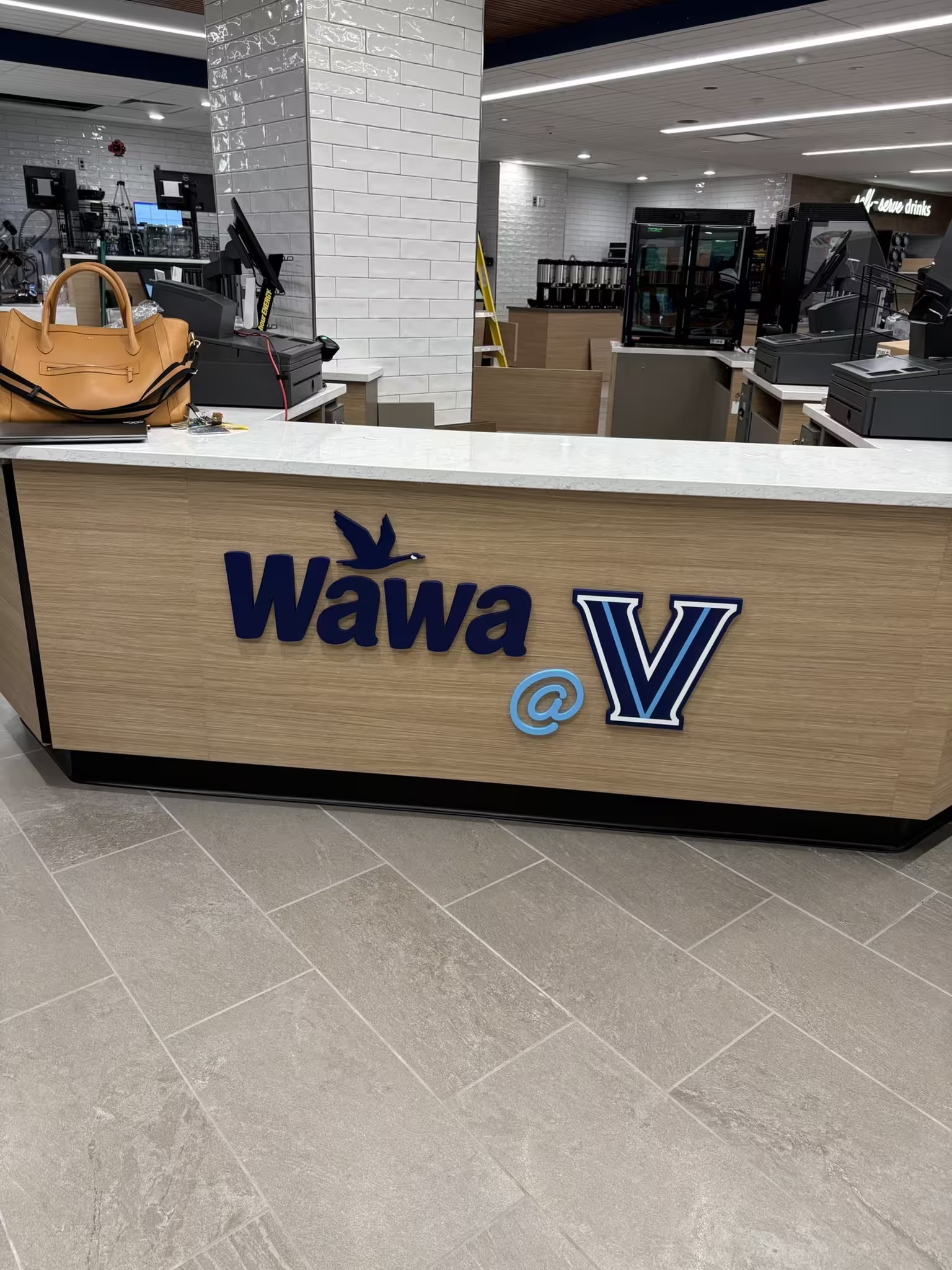
Flat Cut Acrylic
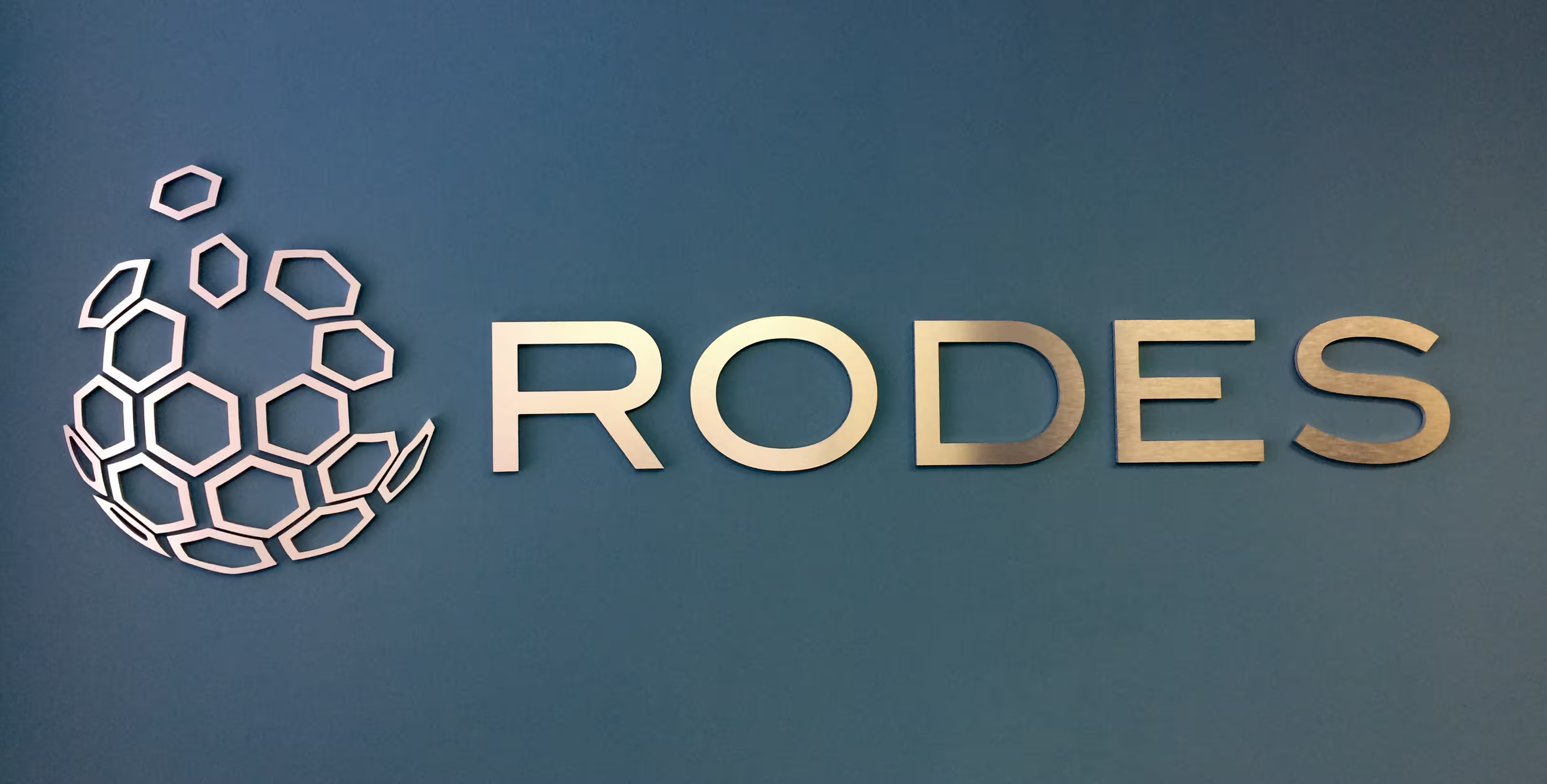
Metal Laminate
Gallery
.avif)
.avif)
.avif)
.avif)
.avif)
.avif)
.avif)
.avif)
Insights
Uses
Dimensional letters are individual, cut or fabricated characters that stand off from asurface to create depth and visual interest. You’ll see them used on building exteriors,lobby walls, reception areas, and even interior wayfinding systems. They can be madefrom a range of materials, including metal, acrylic, PVC, or high-density urethane,depending on the look and environment. Because each letter is separate, they give aclean, tailored appearance that works well for both bold branding and more understateddesigns.
Benefits
One of the main benefits of dimensional letters is their versatility. They can be finishedin brushed metal for a sleek, modern feel or painted in custom colors to match a brandexactly. The added depth creates natural shadows, which improves readability withoutneeding heavy backgrounds or large panels. Compared to full sign cabinets,dimensional letters often feel more refined and less bulky. They can also be combinedwith lighting, either through external fixtures or integrated halo illumination, to extendvisibility into the evening hours.
Installation
Installation depends on the size, material, and mounting surface, but accuracy is key inevery case. Letters are usually installed using studs, spacers, or adhesive systems.Stud mounting involves attaching threaded rods to the back of each letter and securingthem into pre-drilled holes in the wall, which provides strong, long-term support.Templates are typically used to ensure consistent spacing and alignment duringinstallation. For larger exterior applications, installers also need to account for windload, wall type, and proper anchoring to maintain stability over time.
Care
Caring for dimensional letters is generally straightforward. Regular cleaning with a softcloth and mild solution will help maintain their finish and keep them looking sharp. Metalletters may need occasional polishing, while painted or coated surfaces might requiretouch-ups after years of exposure to sun and weather. It’s also worth checking mountsand hardware periodically to make sure everything remains secure. With minimalmaintenance, dimensional letters can hold their appearance and structural integrity formany years.
Frequently Asked Questions
Dimensional letters are three dimensional (3D) sign letters, which are made out of metal, acrylic, or plastic with a CNC (Computer Numerical Control) router or laser machine.
Dimensional letters can technically be made from almost any material, with the most common being acrylic, aluminum, PVC, bronze, brass, and stainless steel.
- Different material options have their own unique production process. Fabricated metal letters, for example, are made by bending thin metal returns (sides) around a flat, CNC-cut, metal face. The returns (sides) and face are welded together to form the letter (or logo). The inside of these letters are hollow and the letters, themselves, are light weight.
- Cut metal letters, also referred to as “Flat cut” letters, are made by machine. A CNC (usually a router, plasma cutter, or waterjet), will cut the letters out of metal sheets. The thickness of the metal sheet determines the thickness of the letters. Cut metal letters are solid and heavier in weight than fabricated metal.
- Acrylic letters are made in a similar way as flat cut metal letters, in that a CNC machine (usually a router or a laser), will cut the letters out of a sheet of acrylic. The thickness of the acrylic will be the thickness of the letters. They are solid letters but more lightweight than solid, cut-metal letters.
Elmark Sign Company can produce dimensional colors in any color, matching specific Pantones to meet branding requirements.
Elmark Sign Company can install dimensional letters into virtually any interior or exterior wall surface, including drywall, poured concrete, and masonry walls.
Yes, most materials are exterior durable and thus suitable for installation inside or out.
- Dimensional letters are frequently installed with studs or tape. Mounting with studs means using small, threaded metal prongs on the back of the sign to attach it to the wall or other surface. Alternatively, Elmark Sign Company can use very high bond (VHB) tape to mount dimensional letters, which is a type of double-sided, pressure-sensitive adhesive tape known for its strong and durable bonding capabilities in both interior and exterior applications.
- Some clients select to have their dimensional letters offset from the mounting surface. Through the insertion of spacers, this creates a unique effect that can vary from as little as one quarter of an inch to half a foot or more.
- Stud mounting is recommended for heavier letters, such as aluminum letters, steel letters, or really thick acrylic letters. The heavier the letter becomes, the less likely that VHB tape will hold them in place over the long term.
- Thinner acrylic letters are easily installed with tape mounting.
- Pro tip – Always add a dab of clear silicone before taping mounted letters. Having two adhesives (the VHB tape and the silicone) offers the best long-term result.
- One should note that removing any dimensional letterset is likely to cause wall damage. Stud-mounted letters leave holes, which can be patched and painted. Adhesive-mounted letters may actually pull up the paint and/or gypsum paper of the drywall when removed, requiring more intensive repairs.
Illumination. The difference between 3D letters (also called dimensional letters), and channel letters is the presence (or absence) of lighting. To put it simply, channel letters are illuminated, while dimensional letters are not.
- A permit is most likely not needed for installation indoors, such as within an office building or home.
- For installation on a building, or outdoors, a sign permit is commonly needed from the local municipality. Their website should have additional information on permitting requirements.
- Yes, we commonly install multiple sets of dimensional letters each week for our clients, as they are a very popular sign type.
- For those client located farther away, we have a national network of professional installers that we’ve developed over 40 years. We can install virtually anywhere in the United States.
If the letters are stud mounted, installation requires a drill, masking tape, a level, silicone, a tape measure, and a center punch (optional). If the letters are tape mounted, the drill and center punch are not needed.
The price will vary greatly based on material, finish, thickness and complexity of design. On average, for a 12″ high letter in 1/4″ thick aluminum, expect to pay between $100-$200 per letter. The same letter in brass, copper, or stainless steel would add a premium. The same letter in 1/4″ acrylic would be between $50-$100 each.
Production times will vary based on the material and complexity of the project design. In general, lead times will be:
Cut acrylic or metal (unfinished): 2-4 business days
With premium metal finish or painting: 7-15 business days
Fabricated metal (unfinished): 6-10 business days
With premium metal finish or painting: 15-20 business days
Our Signs
Explore custom signs by category and see what's possible.
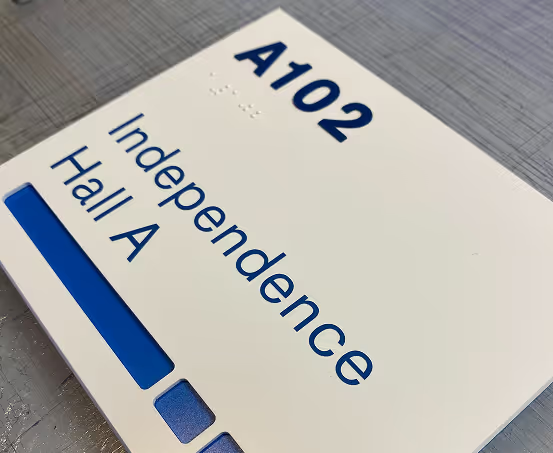
ADA & Braille Signs
%201.avif)
Acrylic Panel Signs
Carved Signs
Dimensional Letters
LED Illuminated Signs
Monument Signs
Plaques
Vehicle Wraps & Lettering
Wall & Window Vinyl
Wayfinding Signs
Let Us Make Your Perfect Sign
Main Office

Tell us about your project